



Most people interpret physical symptoms as isolated issues—fatigue, digestive discomfort, intermittent heart palpitations, temperature changes, or episodes of anxiety and brain fog. But when these symptoms begin to cluster, fluctuate, or persist despite normal lab results, the underlying driver is often something more central: dysregulation of the autonomic nervous system (ANS).
At WildHeart Wellness, we frequently meet patients who have spent years addressing each symptom separately. They’ve had all kinds of tests, seen multiple specialists, and tried various recommendations, yet still don’t have a clear explanation for why they feel unwell with no real resolution.
A commonly overlooked link is ANS dysregulation. When this master regulatory system becomes overactivated or unable to recalibrate, the body’s stress, cardiovascular, digestive, and immune responses can all become disrupted. In this state, symptoms don’t just coexist—they reinforce and intensify one another.
Your Autonomic Nervous System:
The Body’s Hidden Operating System
Your autonomic nervous system manages the functions you don’t consciously control—heart rate, blood pressure, digestion, breathing, temperature regulation, circulation, immune activity, inflammation cycles, and more. This regulatory network influences nearly every organ system in your body and is deeply connected to cardiovascular, metabolic, neurological, and emotional health.
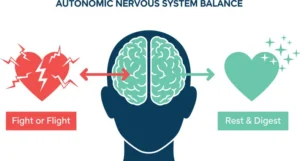
The ANS has two core branches:
- The sympathetic nervous system (SNS), which drives the “fight or flight” stress response. You can think of it like the gas pedal on a car.
- The parasympathetic nervous system (PNS), which governs “rest and digest” functions and should ideally be your nervous system’s default state. You can think of it like the brakes on a car.
A healthy nervous system moves fluidly between these two states throughout the day as needed. Typically, there should be short bursts of sympathetic activity with your system settling back into resting parasympathetic mode. But when life is chronically stressful, unpredictable, or overwhelming—physically, emotionally, or biochemically—the body can get stuck in survival mode with the gas pedal pressed to the floor all the time. That’s when dysregulation begins.
How Autonomic Dysregulation Starts
ANS dysregulation happens when the nervous system loses its ability to shift out of stress mode and return to calm. Chronic sympathetic activation disrupts the body’s internal balance and gradually erodes its resilience. Research on heart rate variability (HRV)—a measure of the variation in time between heartbeats and a key indicator of autonomic flexibility—consistently shows that prolonged stress and sympathetic dominance lead to lower HRV. Reduced HRV is strongly associated with increased cardiovascular risk, metabolic disorders, chronic pain, poor sleep, and reduced stress tolerance.
But stress is not the only culprit. Other contributors include:
- Chronic inflammation
- Blood sugar instability
- Hormone imbalance
- Mold and toxin exposure
- Gut dysbiosis
- Viral or post-viral syndromes
- Trauma (physical or emotional)
- Small-fiber neuropathy
Over time, this combination of stressors can cause the ANS to become rigid and reactive rather than fluid and adaptive. The result can be a cascade of symptoms that may seem unrelated but share a common source cause.
What ANS Dysregulation Feels Like
Autonomic imbalance is deeply personal, yet the patterns are remarkably consistent. Some people feel dizzy when standing, while others battle relentless fatigue, digestive issues, or unexplained anxiety. Many describe a strange sense of internal “instability,” like their body is running without an organized rhythm. Common experiences include:
- Feeling lightheaded or faint, especially when standing
- A racing or irregular heartbeat
- Temperature intolerance (always too hot or too cold)
- Chronic fatigue that doesn’t improve with rest
- Brain fog or slowed thinking
- Digestive difficulties, including bloating, nausea, or slow motility
- Unexplained anxiety, panic, or internal restlessness
- Numbness, tingling, or altered sweating patterns
- Blood pressure that drops or spikes unpredictably
- Sensitivity to exercise or physical exertion
Most patients have been told their symptoms are “normal,” “stress-related,” or “all in their head”—not because their providers lack care or competence, but because traditional lab tests do not measure autonomic function. To understand the ANS, we need the right tools.
Modern Testing for a System That Isn’t Seen on Standard Labs
At WildHeart Wellness, we use VitalScan Autonomic Testing, an advanced, non-invasive assessment that reveals how effectively your nervous system regulates your body’s core functions. This testing gives us clarity that standard bloodwork simply cannot. Such as:
HRV (Heart Rate Variability) Analysis
HRV measures how adaptable your nervous system is. Higher HRV reflects healthy autonomic balance. Lower HRV reflects stress overload and decreased resilience. VitalScan’s HRV algorithms are validated through more than 300,000 patient studies and provide highly accurate insight into SNS/PNS interplay.
Pulse Wave Velocity (PWV)
PWV measures arterial elasticity—an essential marker of cardiovascular and autonomic health. According to VitalScan Vascular research, PWV helps identify early arterial stiffness, circulation issues, and vascular changes often linked to sympathetic overactivity.
Sudomotor Testing (SudoCheck)
Sudomotor analysis evaluates the small nerves that regulate sweat and microcirculation. This is one of the earliest indicators of diabetic autonomic neuropathy, small-fiber neuropathy, and metabolic stress. We do SudoCheck testing. It is quick, non-invasive, and highly sensitive.
Together, these three assessments create a comprehensive, functional picture of the autonomic nervous system—something not offered in most traditional medical settings.
How We Help Patients
Rebalance their Nervous System
Healing the autonomic nervous system is absolutely possible. At WildHeart Wellness, we take a whole-body approach to helping your ANS recover balance that includes physiology, lifestyle, emotional health, and metabolic stability.
Strengthening vagal tone often begins with intentional breathwork, HRV-informed practices, gentle movement, and somatic strategies that help your body shift out of survival mode. Reducing inflammatory and metabolic stress—by stabilizing blood sugar, supporting hormone balance, improving digestive health, and enhancing detoxification—gives your nervous system the metabolic foundation it needs. As mitochondrial energy improves, the ANS becomes more capable of healthy self-regulation. When emotional patterns and past stress are acknowledged and worked through, the nervous system can relax, recalibrate, and respond to life with more steadiness. Your ANS is designed to heal. It simply needs the right input and guidance to do it.

To support patients more deeply, WildHeart Wellness now offers VitalScan Autonomic Testing, a fast, noninvasive assessment that takes less than 25 minutes and provides a comprehensive look at how well your nervous system is regulating core functions. Unlike standard blood tests—which can appear “normal” even when you feel anything but—VitalScan evaluates real-time autonomic activity, including heart rate patterns, vascular function, and small-fiber nerve performance. This science-based testing helps uncover hidden imbalances that often drive symptoms such as dizziness, fatigue, palpitations, temperature intolerance, digestive issues, anxiety, and brain fog, giving you meaningful answers and a clear path forward.
The Bottom Line:
Your Nervous System Can Heal
Autonomic dysfunction can feel overwhelming—especially when symptoms appear across multiple systems at the same time and no one has been able to explain why you feel the way you do. But ANS dysregulation is not a life sentence. With the right testing, the right plan, and the right support, your body can recover its rhythm, balance, and resilience.
At WildHeart Wellness, we help you interpret your symptoms, uncover the source causes of imbalance, and create a personalized strategy that restores your energy, clarity, and well-being. If you’ve been told “everything looks normal” but you know something isn’t right, VitalScan Autonomic Testing may be the missing piece you are looking for.
You deserve answers. You deserve a plan that helps you feel whole again. We’re here to help you heal—one balanced breath, one regulated moment, and one renewed system at a time.
Schedule your VitalScan Autonomic Assessment today and take the next step toward restoring balance from the inside out. Call (717) 786-3199 or visit wildheartwellness.com to book your appointment.